
Fly Accuracy Games
In fly accuracy games, the caster endeavors to place a fly into or close to a target with one of several techniques while using various types of equipment. What the fly is, which casting technique(s) is(are) required, and what the equipment limitations are is explained for the events listed below. There are also links to the exact rules for those games.
Trout Fly Accuracy
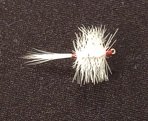
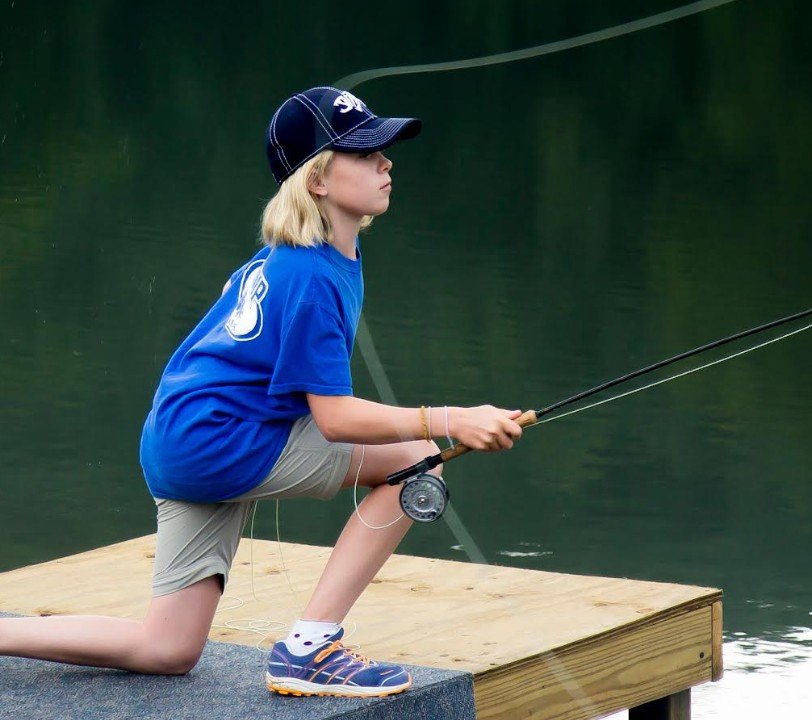
The Trout Fly Accuracy game got its name for two reasons. One is that a relatively small fly is used - as it is often the case for trout fishing. The other is that that three different techniques are required which all have their place while pursuing trout.
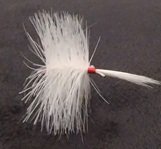
The fly (see picture) has a diameter of no more than ½ inch. The leader must be at least 9 feet long with a thin (<= 0.008”) tippet that is at least 18 inches long. The line maybe as heavy as a 6-weigth line and the rod should be 9’ or less.
The game is split into three rounds which each round requiring a different style of casting. First, the Dry Fly round requires overhead casting and permits unlimited falsecasting. The caster extends the line for the next target - without letting the fly hit the water - until ready to make the presentation cast. The fly must not sink, i.e. it must remain “Dry”. If it does or if it is not in the center of the target, there are deductions from the perfect score. The lengthening of the line and the presentation cast are repeated for a total of five targets. Before the second round - the Wet Fly round, the caster retrieves all the line (without reeling it in). In the Wet Fly round, the fly is not required to float (it is meant to stay “Wet”), but only a single falsecast is permitted when going from one target to the next. In a third round - the Roll Cast round, the caster has 15 attempts to place the fly into all five targets (again shortest to longest) using the roll-cast technique.
For the detailed Trout Fly Accuracy rules, see page 14 of the Rules and Tournament Regulations.
Bass Bug Accuracy
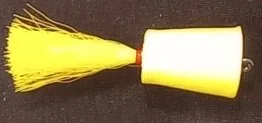
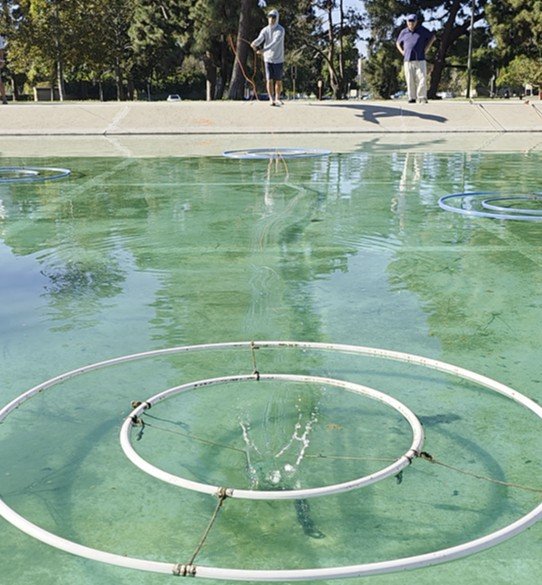
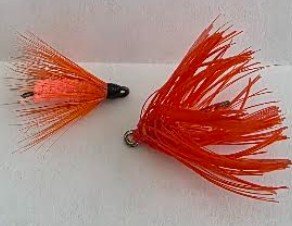
The Bass Bug Accuracy game got its name because it simulates the casting part of Bass fishing. The “lure” is a cork with a tail which - if it had a full hook - would be a passable Bass popper. The leader only needs to be at least 6 feet with a fairly thick (<= 0.014”) tippet that is at least 12 inches long. The line maybe as heavy as a 9-weigth line and any suitable rod may be just over 9 feet long.
The game simulates quick casting to various spots where we know or suspect Bass. “Quick” means there is a limit to the number of falsecasts we are allowed to make between targets. There are two rounds. In the first round, two falsecasts are allowed between targets. Only one falsecast is allowed in the second round.
For the detailed Bass Bug Accuracy rules, see page 18 of the Rules and Tournament Regulations.
Dry Fly Accuracy
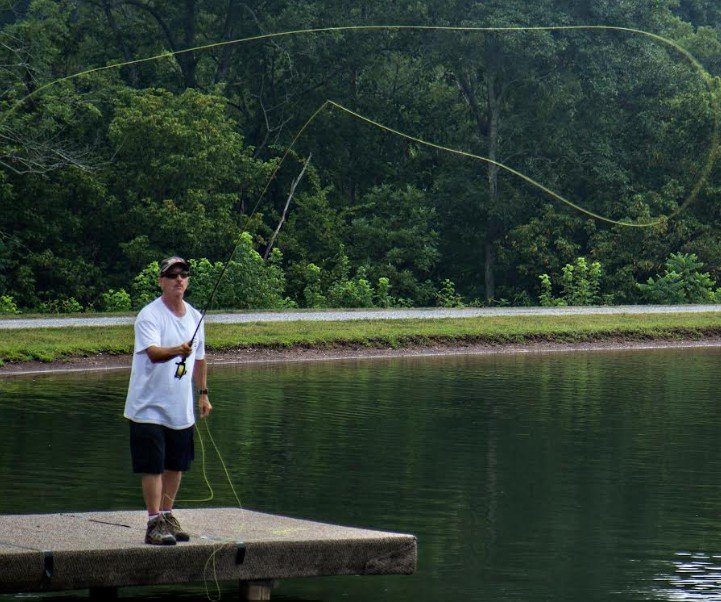
The Dry Fly Accuracy game got its name because it simulates the casting part of fishing with a dry fly. The fly is large - as much as 1 inch in diameter - and easy to see. The leader only needs to be at least 6 feet without any requirements for the tippet. The fly line is unrestricted and any suitable rod may be 9 feet 6 inches long. This makes the equipment easy to select and the Dry Fly game often the first one to be played by beginners.
The game’s procedure is simple. The caster attempts to put the fly into each of five targets - in a predetermined order - and repeating that for a total of 10 targets. There is no limit on the number of falsecasts. Of course, the fly must not touch the water, i.e. it must stay “dry”, except for the intentional lay-down cast where the fly is supposed to land in the next target.
For the detailed Dry Fly Accuracy rules, see page 12 of the Rules and Tournament Regulations.
Trout Accuracy (ICSF)
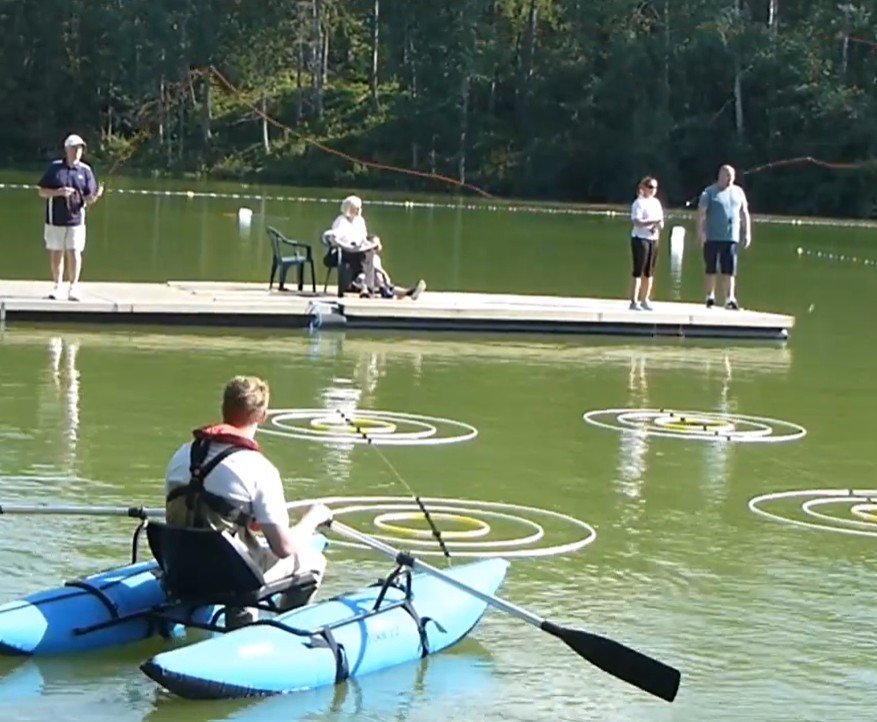
The Trout Accuracy game (not “Trout Fly Accuracy”!) is a Special Event taken from the games maintained by the Flycasting division of the International Castingsport Federation. In several aspects, this game is similar to the ACA’s Dry Fly Accuracy game, but there are notable differences: The fly is a bit smaller (16 to 20 mm), the fly line must be a specific 5-weight line, the targets are smaller, more casts are required in a shorter time, but the fly is not required to float. Not only is the permitted time shorter, but time is also kept to give the faster caster the advantage in case of ties.
The game’s procedure is simple. There are four targets which are addressed from left to right - four times for a total of 16 casts. The caster attempts to put the fly into the center of each target without letting the fly tick the water while making as many falsecasts as deemed necessary. Unlike in Dry Fly, the fly is not required to float and the caster does not need to wait for the judge to signal something before moving on to the next target.
For the detailed Trout Accuracy rules, see page 5 of the ICSF Flycasting rules.
Wet Fly Accuracy
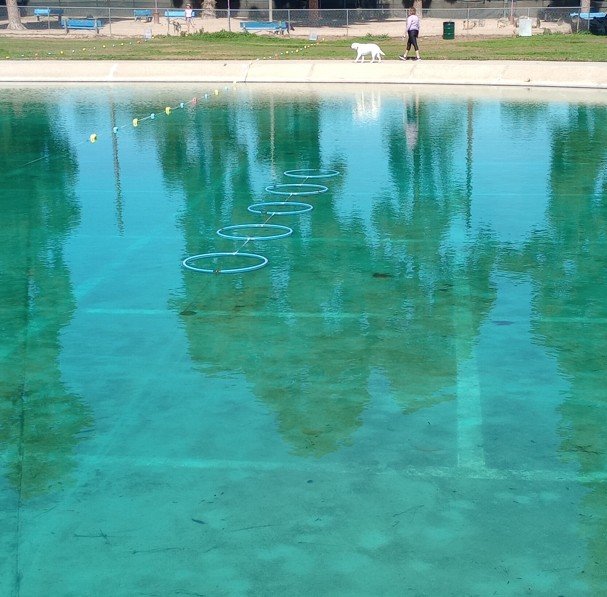
The Wet Fly Accuracy game is a Special Event that encourages and tests basic fly casting skills. One of the first things a flycasting beginner learns is to make a pick-up and laydown. The Wet Fly game essentially asks the question: How well can you do that pick-up and lay-down? There are five targets neatly arranged in a row with the same spacing between all of them. The caster makes two pick-up and lay-down casts at each target - from the shortest one step by step to the longest one. The caster is free to make as many casts as desired to get the distance to the first target right. After he/she says “Score”, the two-casts per target program begins. The caster makes any necessary adjustments to the line length at any time - typically while the line is laid out in front.
The idea of the game is simple. It can be played with practically any flycasting outfit (short of Tenkara). It is an ideal game for beginners but also a great game for honing the basics for those who want to be really good at the other fly accuracy games.
For the detailed Wet Fly Accuracy rules, see page 10 of the Special Programs and Events document.