
Plug Accuracy Games
“Plug” in this context means a safe substitute for artificial lures - without any hooks, aerodynamically shaped, in bright colors to make it easy to see. Just like one might cast lures to a particular spot - a splash, next to a pylon, a gap in the lilies, etc. - these games require the plug to be cast to targets placed at various distances. In three of our games, the single-handed casting technique is unrestricted. A fourth game specifically requires four different casting styles.
The rod selection and casting technique are up to the caster (one-handed only). The type of reel to be used depends on the weight of the plug. For 1/4 ounce plugs, a spinning reel is required. For 5/8 ounce plugs, adults must use a revolving-spool reel (conventional, baitcaster). For 3/8 ounce plugs, the caster may choose the reel type. Targets at 33 to 80 feet can be arranged in a variety of ways. The casting program consists of 10 casts. Only the best casters hit the center of the target on all 10 casts - and only sometimes.
1/4 oz. Plug Accuracy
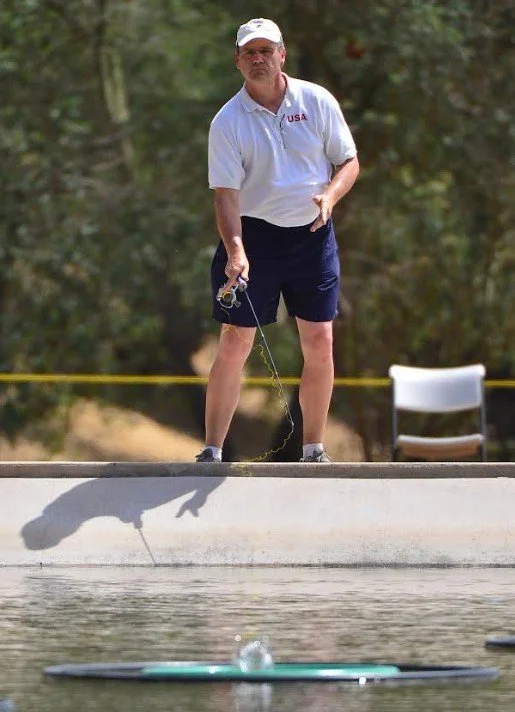
In 1/4 oz. Plug Accuracy, the plug must weigh 0.25 ounces (with some tolerance). The reel must be a spinning reel. The rod and line can be freely selected by the caster. Rods between 5 and 7 feet are common. The line is typically a monofilament in the 4 or 5 lb class.
Since the targets are placed between 40 and 80 feet away, most casters use an overhead casting style. After propelling the plug toward a target, the best casters control the line coming off the reel in more or less gentle fashion between their index finger and the edge of the spool. This is called “feathering”. The goal is to adjust the trajectory of the plug such that its flight ends in the target. This implies that the cast is made with enough plug speed that the plug would travel somewhat past the target without the feathering. Expert feathering not only shortens the path of the plug but can also achieve modest left-right adjustments.
The detailed rules can be found on page 21 of the Rules and Tournament regulations.
3/8 oz. Plug Accuracy
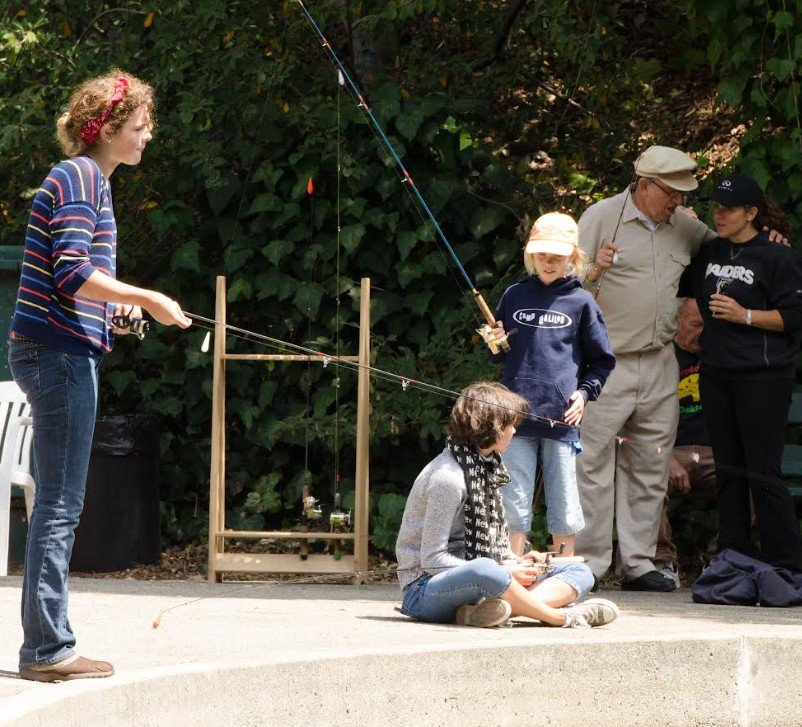
In 3/8 oz. Plug Accuracy, the plug must weigh 0.375 ounces (with some tolerance). The rod and line can be freely selected by the caster. Rods between 5 and 7 feet are common. The caster may choose between using a spinning reel or a revolving-spool reel (often called a conventional reel or baitcaster). With spinning reels, the line is typically a monofilament in the 4 or 5 lb class. This may also work with revolving-spool reels, but a braided line is often preferred.
Since the targets are placed between 40 and 80 feet away, most casters use an overhead casting style. After propelling the plug toward a target, the best casters control the line coming off the reel - called “feathering”. The goal is to adjust the trajectory of the plug such that its flight ends in the target. This implies that the cast is made with enough plug speed that the plug would travel somewhat past the target without the feathering. Expert feathering not only shortens the path of the plug but can also achieve modest left-right adjustments.
The detailed rules can be found on page 21 of the Rules and Tournament regulations.
5/8 oz. Plug Accuracy
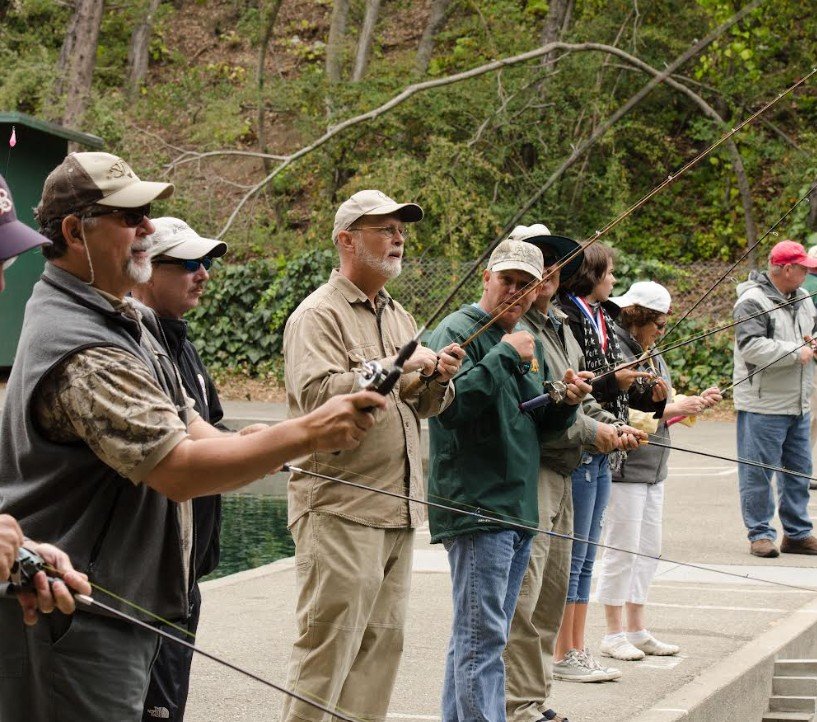
In 5/8 oz. Plug Accuracy, the plug must weigh 0.625 ounces (with some tolerance). The rod and line can be freely selected by the caster. Rods between 6 and 7 feet are common. A revolving-spool reel (often called a conventional reel or baitcaster) is mandatory for adults. The line is typically of a braided type in the 8 to 15 lb range.
Since the targets are placed between 40 and 80 feet away, most casters use an overhead casting style. After propelling the plug toward a target, the best casters control the line coming off the reel - called “feathering”. The goal is to adjust the trajectory of the plug such that its flight ends in the target. This implies that the cast is made with enough plug speed that the plug would travel somewhat past the target without the feathering. Expert feathering not only shortens the path of the plug but can also achieve modest left-right adjustments.
The detailed rules can be found on page 21 of the Rules and Tournament regulations.
Spinning Accuracy Arenberg target
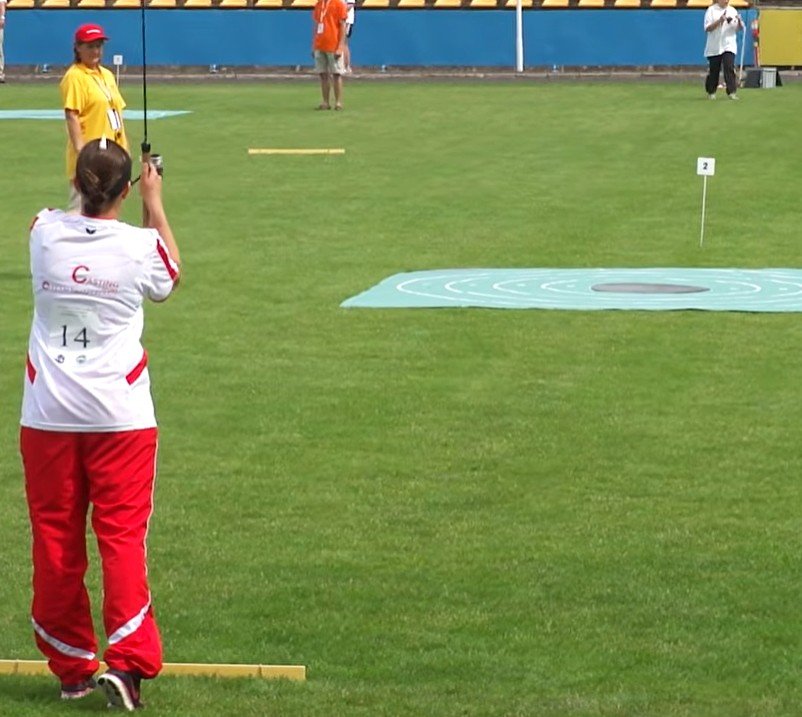
In Spinning Accuracy Arenberg Target (or “Arenberg” for short), the plug must weigh 7.5 grams (with some tolerance) and meet ICSF specifications. The rod and line can be freely selected by the caster. Rods between 5 and 6 feet are most common. A spinning reel must be used. The line is typically a monofilament in the 4 or 5 lb class.
There is a single target - a tarp with white rings and a black central disk - surrounded by five casting stations at distances between 33 and 59 feet. At the first four stations, a quite specific casting style is required: 1) Underhand, 2) Right Side, 3) Overhead, and 4) Left Side. This tests how a caster can deal with obstructions (without actually requiring any obstructions to be present). The “feathering” from the three games above still works. However, most casters prefer a more elaborate technique for the side casts: The plug is allowed to somewhat pass the target on the same side as the cast, is gently stopped and guided toward the target by raising the rod tip just right. At the fifth station, the caster may use any arbitrary technique (typically overhead casting).
The detailed rules can be found on page 9 of the ICSF’s Casting rules.